sales@fvfindia.com - GST NO. : 27AABCF6827G1ZL
- Send Email

0.5 - 2 Lac / piece( + 18% GST applicable)
| Business Type | Manufacturer, Exporter, Supplier |
| Application | Steel Pickling,Chemical Synthesis & Production,Oilfield Acidizing,Water Treatment & PH Control |
| Operation Type / Actuation | Manual,Pneumatic,Electric, GEAR |
| End Connection Type | Flanged, WELDED,Socket Weld,Threaded,Butt Weld |
| Click to view more | |
Product Details
PN Rating (DIN / EN Standard)
PN 10 TO PN 400
Pressure Rating ( Class )
150# TO 2500#
Size / Diameter (DN / NPS)
1/2" TO 24"
Material (Body / Trim)
PFA, FEP, Hastelloy B-3 (ASTM N10675), Hastelloy C-276 (ASTM N10276). Tantalum
Valve Type
Lined Ball Valves, Bellows Sealed Globe Valves, Diaphragm Valves (Saunders Type), Gate, Globe, Plug
Flow direction
Bi-directional
Coating / Finish
Anti-Corrosive
Valve Design Standards
API 600 / API 603, API 608, API 6D, API 609, ASME B16.34
Fire Test Standards
API 607 / API 6FA
Fugitive Emissions Testing
ISO 15848-1, API 622 / API 624
Inspection & Testing Standards
API 598, API 527,
Countries we serve
USA, Canada, UK, Germany, Turkey, Saudi Arabia, UAE, Iraq, Libya, Egypt, Nigeria, South Africa, Russia, Tanzania, Venezuela, Brazil, Australia, Japan, Qatar
Major Cities we supply
Houston, Texas, Chicago, Baton Rouge, Calgary, Edmonton, Toronto, Aberdeen, Abu Dhabi, Dubai, Dammam,Riyadh Jubail, Yanbu, Jeddah, Düsseldorf, Istanbul, Ankara, Moscow, Chelyabinsk, St. Petersburg
Product Code
FVFHCL1
Port
JNPT
Payment Terms
L/C, D/A, D/P, T/T
Delivery Time
10 WEEK
Packaging Details
EXPORT WOODEN BOXES
Falcon Valves provides highly engineered solutions for Hydrochloric Acid (HCl), a volatile and aggressive reducing acid. Because HCl rapidly attacks standard stainless steels (300 series) causing pitting and stress corrosion, Falcon utilizes "Super Alloys" and specialized fluoropolymer linings to ensure zero-leakage and long-term mechanical integrity.
1. Special Brief Description
Falcon Hydrochloric Acid service valves are designed to manage the high reactivity of $HCl$ in both gaseous and liquid forms. The core engineering focus is on Permeation Resistance and Metallurgical Stability. Unlike oxidizing acids, HCl requires materials with high Molybdenum content to maintain a passive protective layer. Falcon’s design prevents "hidden corrosion" by using solid forged bodies or thick-wall linings, ensuring that the acid never reaches the base structural metal.
2. Various Types of HCl Valves
Depending on the concentration, temperature, and pressure, Falcon offers the following configurations:
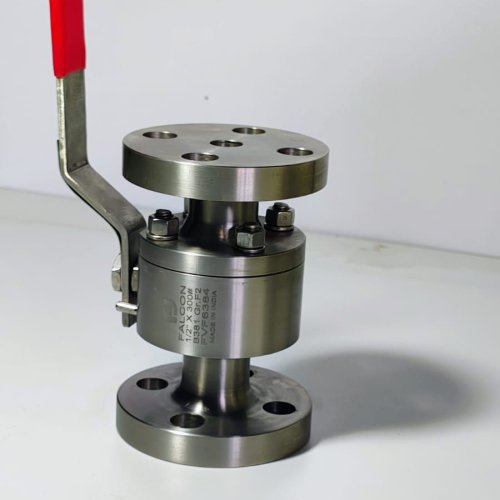
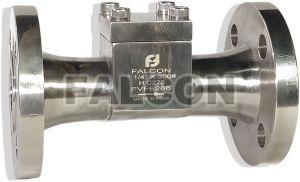
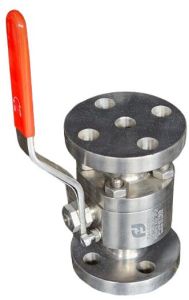
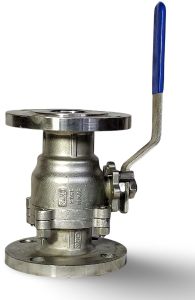
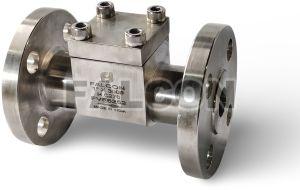
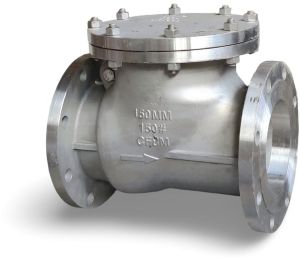
A. Lined Ball & Check Valves
-
Best For: High concentration HCl at moderate temperatures (up to 200°C).
-
Design: A ductile iron or carbon steel outer shell for structural strength, with a thick PFA/FEP lining (usually 3mm to 5mm) molded into the body.
-
Benefit: Total chemical inertness; the acid only contacts the plastic lining.
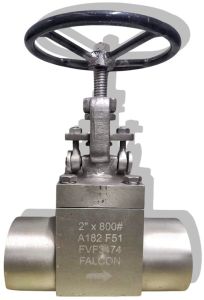
B. Hastelloy® Globe & Gate Valves
-
Best For: High-temperature HCl or high-pressure stripping columns.
-
Design: Outside Screw & Yoke (OS&Y) construction to keep the stem threads away from the acid vapors.
-
Benefit: Superior mechanical strength compared to lined valves, capable of handling Class 600# to 2500# pressures.
C. Bellows Sealed Valves
-
Best For: Anhydrous (dry) HCl gas or toxic acid fumes.
-
Design: Incorporates a multi-ply Hastelloy C276 bellows that forms a permanent hermetic seal.
-
Benefit: Eliminates the risk of "fugitive emissions" through the stem packing, protecting operators from toxic fumes.
D. Pressure Relief Valves (PRV/PSV)
-
Best For: HCl storage tanks and reactor vessels.
-
Design: Equipped with Tantalum-coated springs or Hastelloy bellows to ensure the safety valve doesn't corrode shut or leak prematurely.
3. Materials Used in Construction
The selection of material is the most critical factor in HCl service. Falcon adheres to the following metallurgical standards:
Wetted Metallic Parts (Alloys)
-
Hastelloy® B-3 (N10675): Specifically formulated for resistance to Hydrochloric Acid at all concentrations and temperatures. It is the primary choice for boiling HCl service.
-
Hastelloy® C-276: Used when the HCl is "contaminated" with oxidizing salts (like Ferric Chloride) or traces of Chlorine gas.
-
Tantalum: Used as a cladding or solid component for the most extreme, highly concentrated, and hot HCl applications where even Hastelloy may have a limited life.
Sealing & Lining Materials
-
PFA (Perfluoroalkoxy): High-density lining used in ball and plug valves for its superior permeation resistance.
-
PTFE/TFM: Used for seats and gaskets; TFM is often preferred for its lower porosity and better "spring-back" after compression.
-
Ceramic: In high-abrasion HCl service (where solids are present), Falcon uses solid ceramic balls and seats to prevent erosion-corrosion.
Bolting & External Protection
-
PTFE Coated Fasteners: To prevent external "atmospheric corrosion" (acid fumes in the air eating the bolts), Falcon provides XYLAN or PTFE coated B7/2H bolting.
4. Technical Data Table
| Feature | Lined Series | Metallic (Alloy) Series |
| Max Temperature | 200°C | 450°C+ |
| Corrosion Resistance | Excellent (Inert) | Excellent (Active Resistance) |
| Pressure Class | 150# / 300# | 150# up to 2500# |
| Common Application | Chemical Distribution | Primary Production / Reactors |
| Stem Seal | V-Ring Packing | Bellows + Graphite Packing |
Falcon performs PMI (Positive Material Identification) on every Hastelloy component. This ensures that the high Molybdenum content—the key to surviving HCl—is verified before shipment.
Looking for "Hydrochloric Acid Service Valves" ?
Piece
Explore More Products

Our Blogs