sales@fvfindia.com - GST NO. : 27AABCF6827G1ZL
- Send Email


1 Lac - 10 Lac / Piece( + 18% GST applicable)
| Business Type | Manufacturer, Exporter, Supplier |
| Valve Type | Transfer Line Valves, Decoking Valves, Triple Offset Butterfly Valves, Cryogenic Gate & Globe Valves |
| Pressure Rating | 150# TO 2500# |
| Material | LCB, LCC, LF2, CF8 (304), CF8M (316); CF3/CF3M, Inconel 625, Hastelloy C276, Monel 400 |
| Click to view more | |
Product Details
Flow direction
Bidirectional
Application
Ethylene Production (Furnace & Cracking),Compression & Fractionation,Ethylene Transport (Pipelines
Seal Type
Metal Seal
Seat Material
Metal Seat
End Connection Type
Flanged, WELDED,Socket Weld,Threaded,Butt Weld
Size / Diameter (DN / NPS)
½ Inch To 48 Inch
PN Rating (DIN / EN Standard)
PN 10 TO PN 400
Operation Type / Actuation
Manual,Pneumatic,Electric, GEAR
Design Standards
API 600 / API 602, API 608, API 609, ASME B16.34, ASME B31.3
Fire Safety & Emission Standards
API 607 / API 6FA
Fugitive Emissions Standards
ISO 15848-1, API 622 / API 624
Material & Quality Compliance
NACE MR0175 / ISO 15156, MSS SP-55
Inspection & Testing
API 598, API 527, EN 10204 3.1 / 3.2
Features
Automatic Cavity Pressure Relief, Fire-Safe Certified, Anti-Static Design, Blow-Out Proof Stem, Stellite™ Hard-Facing, Zero-Leakage Sealing,
Product Code
FVFESV1
Port
JNPT
Payment Terms
L/C, D/A, D/P, T/T
Delivery Time
10 WEEK
Packaging Details
EXPORT WOODEN BOXES
Falcon Ethylene Service Valves: Technical Overview
Falcon Ethylene Service Valves are engineered to handle the unique challenges of ethylene production, storage, and transport. Ethylene (and its oxide form) is highly flammable, often stored at cryogenic temperatures, and requires zero-leakage performance to ensure plant safety.
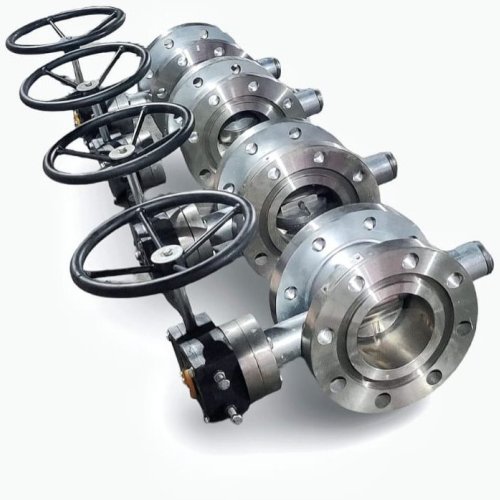
1. Triple Offset Valves (TOV)
Falcon Triple Offset Valves are designed for high-cycle, tight-shutoff applications where gate or globe valves are too heavy or space-constrained.
-
Design Principle: The triple offset geometry (eccentric shaft, eccentric seat, and inclined conical seat) eliminates friction between the seal and the seat during travel, providing torque-seated zero leakage.
-
Ethylene Specifics:
-
Fire-Safe Design: Inherently fire-safe due to all-metal construction (Stellite® Grade 6 hard-facing on seats).
-
Materials: Bodies in WCB, LCB (for low temp), or CF8M (Stainless Steel).
-
Bi-Directional Sealing: Capable of maintaining a bubble-tight seal regardless of flow direction, crucial for ethylene manifold systems.
-
-
Temperature Range: Rated for extreme fluctuations from -196°C to +600°C.
2. Ethylene Transfer Line Valves (TLV)
These are the most critical valves in an ethylene plant, situated at the outlet of the cracking furnace. They must manage the "cracked gas" which is extremely hot and contains abrasive coke particles.
-
Construction: Heavy-duty Double Disc Gate or specialized Through-Conduit Gate designs.
-
Technical Features:
-
Steam Purging: Equipped with steam-flushing ports in the body and bonnet to prevent the accumulation of coke/carbon deposits in the valve cavity.
-
High-Temperature Alloys: Typically manufactured from high-nickel alloys or heat-resistant stainless steels (e.g., HK-40 or HP-40) to prevent thermal creep.
-
Internal Hard-Facing: Critical internal parts are coated with Tungsten Carbide or Stellite to resist the high-velocity erosion of cracked gas.
-
-
Size Range: Large bore designs typically ranging from 12" to 48".
3. Decoking Valves
Used during the furnace decoking cycle, where air and steam are blown through the furnace tubes to burn off accumulated carbon (coke).
-
Operating Conditions: These valves must handle a mixture of steam, air, and abrasive coke particles at high velocities.
-
Design Features:
-
Erosion Resistance: Features reinforced seating areas and specialized flow paths to minimize turbulence.
-
Rapid Actuation: Often fitted with high-torque pneumatic or hydraulic actuators to ensure fast switching between "Process" and "Decoke" modes.
-
Self-Cleaning: The movement of the valve disc or wedge is designed to "scrape" the seat surface, ensuring a clean closure even in the presence of solids.
-
-
Sealing: Metal-to-metal seating is standard to withstand the mechanical wear of the decoking process.
4. Technical Comparison & Quality Data
| Feature | Triple Offset Valves | Transfer Line Valves | Decoking Valves |
| Primary Goal | Tight Shut-off / Isolation | High-Temp Process Flow | Erosion Management |
| Common Media | Liquid/Gaseous Ethylene | Cracked Gas (Process) | Air, Steam, Coke Solids |
| Seating | Metal Laminated / Solid | Double Disc / Steam Purged | Hard-Faced Metal-to-Metal |
| Standards | API 609, ASME B16.34 | API 600, ASME B16.34 | ASME B16.34, API 598 |
5. Quality Assurance for Ethylene Service
Falcon ensures these specialized valves meet the following criteria:
-
PMI (Positive Material Identification): To verify alloy integrity for high-temp furnace service.
-
Fugitive Emission Testing: Compliant with ISO 15848-1, ensuring zero leakage of flammable ethylene to the atmosphere.
-
High-Pressure Gas Testing: Every unit undergoes nitrogen or helium testing to confirm seal integrity at both ambient and operating temperatures.
Looking for "Ethylene Service Valves" ?
Piece
Explore More Products

Our Blogs