sales@fvfindia.com - GST NO. : 27AABCF6827G1ZL
- Send Email

500.00 / piece( + 18% GST applicable)
| Business Type | Manufacturer, Exporter, Supplier |
| Construction | Single piece, Two piece, Three piece |
| Connection Type | Flanged End, Buttweld, Socket weld, Threaded |
| Operating Temperature | -196 to +800 C |
| Click to view more | |
Product Details
Material
CS, Alloy Steel, Stainless Steel, Hastelloy, Inconel, Monel, Titanium, Zirconium, Alloy 20, 254 SMO
Type
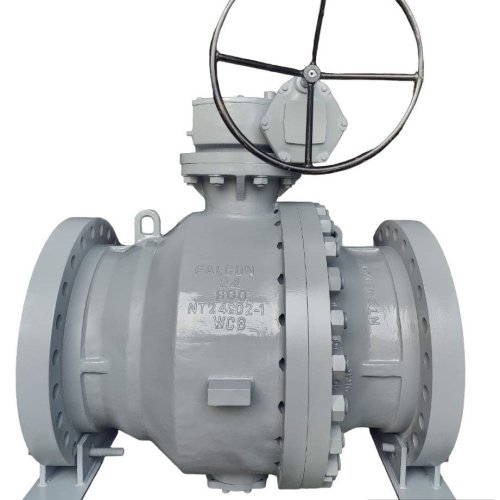
Floating and Trunnion
Size
1/2" to 36"
Product Code
FVFBV1
Port
JNPT
Payment Terms
L/C, D/A, D/P, T/T
Delivery Time
6 WEEK
Packaging Details
EXPORT WOODEN BOX
Material Capabilities: Engineered for Extremes
At Falcon, we specialize in manufacturing Floating and Trunnion Mounted Ball Valves that withstand the most demanding environments. From standard industrial applications to highly corrosive and high-pressure service (up to Class 2500#), our foundry and sourcing capabilities cover the complete spectrum of metallurgy.
Below is a brief guide to the material grades we offer:
1. Carbon Steel (Standard Service)
The backbone of the valve industry, offering excellent strength and durability for general applications.
-
WCB / A105: The industry standard for non-corrosive flow at moderate temperatures. Ideal for water, oil, and gas transmission.
-
Low-Temperature Carbon Steel (LCC / LCB / LF2): Specifically heat-treated to maintain impact toughness in sub-zero environments, essential for cryogenic and northern climate applications.
2. Stainless Steel (Corrosion Resistance)
Designed for clean services and environments requiring resistance to oxidation and chemical attack.
-
Austenitic Stainless (CF8/304, CF8M/316, CF3M/316L): Provides excellent resistance to general corrosion and pitting. Widely used in chemical processing, food & beverage, and pharmaceutical sectors.
-
Stabilized Grades (321, 347): Alloyed with Titanium or Niobium to prevent intergranular corrosion at elevated temperatures.
3. Duplex & Super Duplex (High Strength & Durability)
Bridging the gap between standard stainless and high-nickel alloys, these materials offer superior strength and resistance to Stress Corrosion Cracking (SCC).
-
Duplex (2205 / CD3MN): Offers twice the strength of standard stainless steel with excellent resistance to chloride environments.
-
Super Duplex (2507 / CE3MN): Designed for highly aggressive conditions, such as offshore oil & gas platforms and desalination plants, where pitting and crevice corrosion are major concerns.
4. Alloy Steel (High Temperature & Pressure)
Formulated to withstand extreme heat and pressure cycles without deforming or failing.
-
Chrome-Moly Steels (WC6, WC9, C5, C12): These grades maintain high creep strength at elevated temperatures, making them the preferred choice for power generation and high-temperature refinery processes.
5. Nickel Alloys (Severe Service)
When standard steels fail, Nickel alloys provide the ultimate protection against extreme heat, oxidation, and aggressive acids.
-
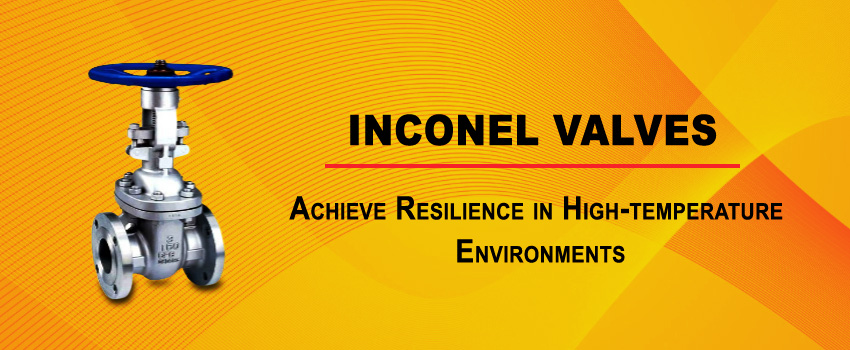
Inconel (600, 625, 718, 825): Exceptional strength and oxidation resistance at extreme temperatures.
-
Monel (400, K500): Renowned for its resistance to rapidly flowing brackish water or seawater and hydrofluoric acid.
-
Hastelloy (C276, C22): The premier choice for the most severe chemical environments, offering unmatched resistance to pitting and stress corrosion cracking in sour gas and acid services.
6. Exotic & Reactive Metals (Specialty Applications)
Falcon prides itself on manufacturing valves from materials that are difficult to source and machine.
-
Titanium (Grades 2, 5, 12): Incredible strength-to-weight ratio and immunity to seawater corrosion. Vital for aerospace, marine, and chlor-alkali industries.
-
Zirconium: Offers unique resistance to highly corrosive acids (hydrochloric, sulfuric, acetic) where even stainless steel and nickel alloys dissolve.
7. Special & Custom Grades
We specialize in the "hard-to-get." If your project requires a specific, non-standard metallurgy not listed here, Falcon has the supply chain and engineering expertise to manufacture it to your exact specifications.
Why Choose Falcon Materials?
-
Full Traceability: All materials come with complete Mill Test Certificates (MTC) ensuring compliance with ASTM, ASME, and NACE MR0175 standards.
-
NACE Compliance: We offer materials specifically heat-treated and tested for Sour Service (H2S) environments.
-
Rigorous Testing: Positive Material Identification (PMI) is performed to guarantee the chemical composition of every valve we ship.
Looking for "FVFBV1 Ball Valves" ?
Piece
Explore More Products




Our Blogs