sales@fvfindia.com - GST NO. : 27AABCF6827G1ZL
- Send Email


0.3 - 2 Lac / Piece( + 18% GST applicable)
| Business Type | Manufacturer, Exporter, Supplier |
| Brand Name | FALCON |
| Manufacturing Standards | ASME B16.34 , ASME Section VIII, Div 1, NACE MR0175 / ISO 15156, ASME B31.3 |
| Material | Alloy 400,UNS N04400,2.4360,NiCu30Fe,Nickel-Copper Alloy,ASTM A494 M35-1,ASTM A494 M35-2,M30C |
| Click to view more | |
Product Details
Surface Finishing
Polished
Shape
Round
Color
BRIGHT
Application
Chemical Fertilizer Pipe,Gas Pipe,Seawater Intake Systems,Desalination Plants,Hydrofluoric Acid (HF) Units,Alkalis,Produced Water
Size
2" to 36"
Certification
ISO 9001:2008 Certified, ASME Section VIII,Div 1,ASME B31.3 / B31.1,PED (Pressure Equipment Directive) 2014/68/EU
Feature
FABRICATED AND CASTING
Type
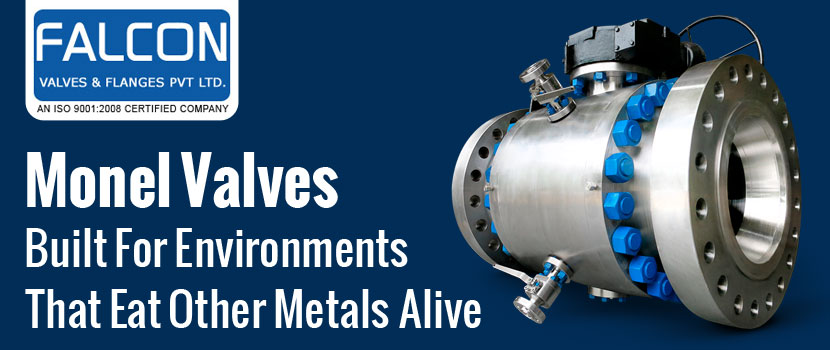
Monel Valve
Country of Origin
India
QUALITY CERTIFICATIONS
EN 10204 3.1 / 3.2, NACE MR0175 / ISO 15156
Warranty
24 MONTH
Mesh
20-400
Perforated sheet
1/32" (0.032"), 1/16" (0.062"), 1/8" (0.125"), 1/4" (0.250")
Condition
New
Pressure
150# To 1500#
Product Code
FVFBSMONEL1
Port
JNPT
Payment Terms
L/C, D/A, D/P, T/T
Delivery Time
4 WEEK
Packaging Details
EXPORT WOODEN BOX
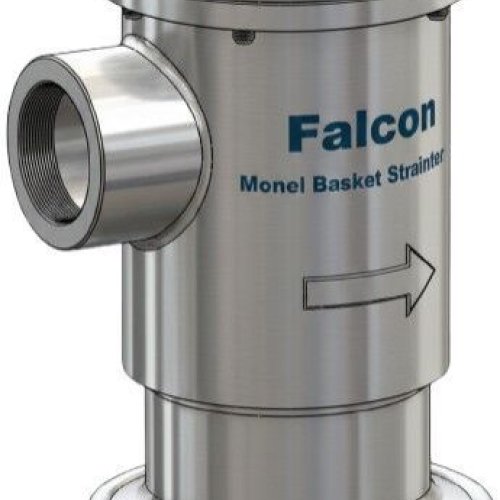
Falcon Monel Basket Strainers: Industrial Overview
Falcon Monel basket strainers are specialized filtration components engineered for highly corrosive environments. Monel (typically Alloy 400 or K-500) is a nickel-copper alloy that provides exceptional resistance to seawater, hydrofluoric acid, sulfuric acid, and alkalis, making these strainers essential for offshore drilling and chemical processing.
1. Design & Engineering
The design process focuses on fluid dynamics and pressure vessel integrity.
-
Standards: Engineered to international standards like ASME B16.34 (valves) and ASME Section VIII (pressure vessels).
-
Flow Optimization: Internal geometry is designed to minimize pressure drop ($\Delta P$) while maximizing the filtration surface area of the basket.
-
Customization: Designs include "Dished End" covers for high-pressure stability and various nozzle configurations (Flanged, Threaded, or Socket Weld) to meet specific piping requirements.
2. Manufacturing & Fabrication
Fabrication involves specialized handling of Monel to prevent contamination and ensure structural strength.
-
Welding: Utilizing TIG (Tungsten Inert Gas) or MIG (Metal Inert Gas) welding with specific Monel filler wires. All welders are typically certified to ASME Section IX.
-
Body Construction: Can be cast or fabricated from Monel plates. Fabricated units allow for custom heights and "off-set" nozzle designs.
-
The Basket: The "heart" of the strainer is fabricated from perforated Monel sheet, often lined with a fine Monel mesh for high-precision filtration.
3. Quality Assurance (QA)
Quality control is rigorous to meet the safety demands of the Oil & Gas sector.
-
Material Traceability: Every component comes with MTCs (Material Test Certificates) per EN 10204 3.1, ensuring the chemical composition is true Monel.
-
Dimensional Check: Verifying flange thickness, face-to-face dimensions, and nozzle alignments against the approved GA (General Arrangement) drawing.
4. Testing Protocols
Before shipment, the strainer undergoes a series of Non-Destructive Testing (NDT) and pressure tests:
-
Hydrostatic Testing: The body is tested at 1.5 times the design pressure to ensure there are no leaks or structural deformities.
-
Pneumatic Testing: Often performed at lower pressures to check for minute air leaks in seals and gaskets.
-
Dye Penetrant Test (DPT): Applied to weld joints to detect surface cracks that aren't visible to the naked eye.
-
Positive Material Identification (PMI): A final X-ray fluorescence check to confirm the alloy grade is correct before the nameplate is attached.
Technical Datasheet: Falcon High-Performance Basket Strainers
This datasheet covers the technical specifications for Falcon’s premium alloy basket strainers, including Monel, Titanium, Hastelloy, Duplex, and Inconel series. These units are designed for critical service applications in the Oil & Gas, Petrochemical, and Marine industries.
1. General Specifications
| Feature | Specification |
| Product Name | Falcon Specialty Alloy Basket Strainer |
| Body Materials | Monel 400/K500, Titanium Gr. 2, Hastelloy C-276, Duplex S31803, Super Duplex S32760, Inconel 625/825, Alloy 20 |
| Sizes | 1/2" to 24" (DN15 - DN600) |
| Pressure Ratings | ASME Class 150, 300, 600, 900, 1500, 2500 |
| End Connections | Flanged (RF, RTJ), Threaded (NPT), Butt-Weld, Socket Weld |
| Design Standard | ASME B16.34 / ASME Section VIII Div. 1 |
Falcon Monel Quality: A Short Overview
Falcon Monel basket strainers are defined by their uncompromising material integrity and precision engineering, specifically tailored for the most aggressive corrosive environments.
Key Quality Pillars:
-
Verified Material Excellence: We use only premium-grade Monel (Alloy 400 or K-500). Every unit is backed by Positive Material Identification (PMI) testing and EN 10204 3.1 certification, ensuring 100% resistance against seawater, brackish water, and hydrofluoric acids.
Looking for "Monel 400 Basket Strainers" ?
Piece
Explore More Products
Our Blogs