sales@fvfindia.com - GST NO. : 27AABCF6827G1ZL
- Send Email

1,500.00 - 25,000.00 / piece( + 18% GST applicable)
| Business Type | Manufacturer, Exporter, Supplier |
| Resistance | Hydrofluoric Acid (HF), Marine & Seawater Excellence, Reducing Acids & Alkalies,Dry Gases, Chlorine |
| Operation | MANUAL, GEAR, ELECTRICAL AND PNEUMATIC |
| End Connection | FLANGED, SOCKET WELD, BUTTWELD AND THREADED |
| Click to view more | |
Product Details
Design
API 602, MSS SP-117
Color
BRIGHT
Material
ASTM B564 UNS N04400, ALLOY 400, MONEL 400, Nickel-Copper 400, W.Nr.2.4360, DIN NiCu30Fe, JIS NCF400
Type
Bolted Bonnet (BB), Welded Bonnet (WB), Pressure Seal Bonnet & Bellows Seal
Size
1/4" TO 4"
Brand
FALCON
Warranty
24 MONTH
Country of Origin
INDIA
Product Code
FVFMONELGV1
Port
JNPT
Payment Terms
L/C, D/A, D/P, T/T
Delivery Time
6 WEEK
Packaging Details
EXPORT WOODEN BOX
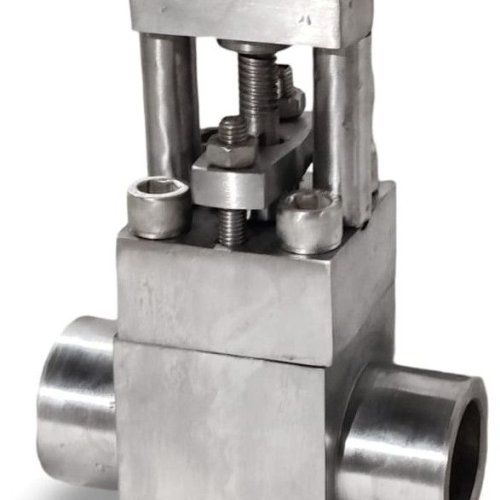
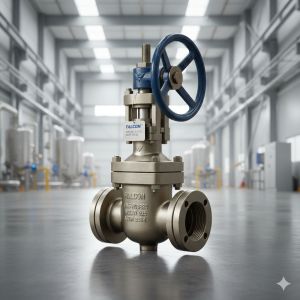
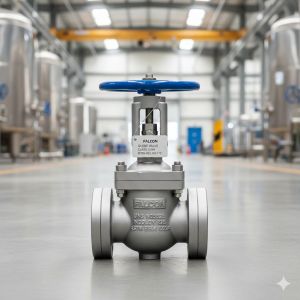
Falcon UNS N04400 (Alloy 400) Forged Gate Valves
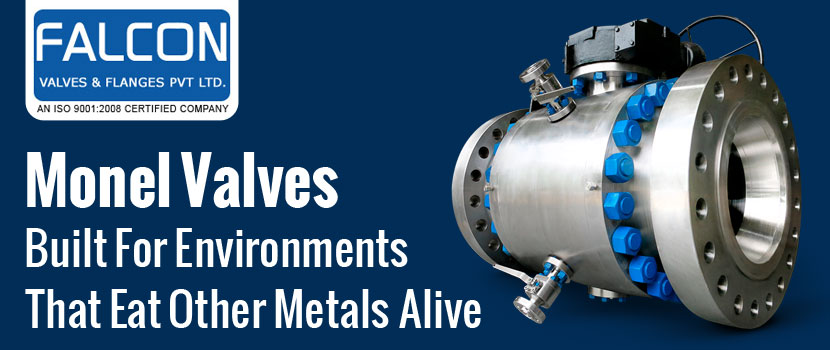
Falcon’s UNS N04400 forged gate valves are high-strength, solid-solution hardened valves that offer exceptional resistance to a wide range of corrosive environments. While Alloy 825 is the specialist for sulfuric acid, Alloy 400 is the industry benchmark for marine engineering and hydrofluoric (HF) acid service.
1. Advanced Design Characteristics
-
Optimized Flow Path: Our forged gate valves feature a full-port design that minimizes turbulence and pressure drop, critical for high-velocity liquid flow.
-
Wedge Geometry: Precision-machined solid wedges provide high structural stability, while flexible wedges are available for larger sizes to prevent "thermal binding" in high-temperature cycles.
-
Outside Screw & Yoke (OS&Y): The rising stem design ensures that the stem threads are never in contact with the corrosive media, extending the service life of the valve.
-
Fugitive Emission Control: Standard graphite or PTFE packing sets are engineered to meet stringent environmental leakage standards.
2. Manufacturing Excellence
-
ASTM B564 Precision Forging: Falcon utilizes closed-die forging to ensure a refined grain structure. This eliminates the porosity and shrinkage defects often found in Monel castings (ASTM A494 M35-1), providing superior toughness and weldability.
-
Cold-Work Strengthening: Alloy 400 gains its strength through cold working during the manufacturing process, and Falcon’s thermal management ensures the material retains its high ductily and impact strength.
-
CNC Machining & Lapping: Seats and wedges are precision-lapped to a mirror finish, ensuring a metal-to-metal seal that exceeds API 598 requirements.
3. Quality & Testing Regime
Every Falcon valve is a "Safety-Critical" component. Our testing protocol includes:
-
Hydrostatic Testing: High-pressure shell and seat tests at 1.5x and 1.1x the pressure rating.
-
Pneumatic Testing: Low-pressure air testing to verify bubble-tight integrity.
-
PMI (Positive Material Identification): 100% verification to ensure the 63% Nickel and 28-34% Copper ratio is exact.
-
NACE Compliance: Available for "sour" service in accordance with NACE MR0175/ISO 15156.
-
Traceability: Heat numbers are hard-stamped on the valve body, linked to EN 10204 3.1 Mill Test Reports.
4. Application Area Expertise
Falcon has decades of experience deploying UNS N04400 valves in the world’s most punishing environments:
-
Marine & Shipbuilding: Handling seawater in high-velocity piping, fire-main systems, and brine heaters where standard stainless steel would pit instantly.
-
HF Alkylation Units: A specialized application in oil refineries where Monel 400 is the only material capable of resisting hydrofluoric acid.
-
Chemical Production: Handling chlorinated solvents and non-oxidizing chloride salts.
-
Power Generation: Used in boiler feedwater heaters and other heat exchangers.
Technical Specifications
| Feature | Details |
| Material | Nickel-Copper Alloy (ASTM B564 UNS N04400) |
| Sizes | 1/2" to 2" (Forged) |
| Pressure Class | 800lb, 1500lb, 2500lb |
| Design Standards | API 602, ASME B16.34 |
| Connections | Socket Weld (SW), Threaded (NPT), Integral Flange (RF/RTJ) |
The Falcon Experience
With over 15 years of experience in exotic alloy fabrication, Falcon doesn't just supply valves; we provide material consultation to ensure your project uses the right alloy for the right environment. Our Alloy 400 valves are trusted by global leaders in the Navy, desalination, and petrochemical industries.
Falcon's "Double-Verify" Quality Policy
Regardless of the alloy, Falcon applies the same Precision Forging (ASTM B564) and API 598 Testing standards. Our engineering team is available to review your Media Data Sheets to ensure the metallurgical selection matches your pipeline's life-cycle requirements.
Looking for "Forged ASTM B564 UNS N04400 Monel Gate Valves" ?
PIECE
Explore More Products
Our Blogs