sales@fvfindia.com - GST NO. : 27AABCF6827G1ZL
- Send Email

1,500.00 / piece( + 18% GST applicable)
| Business Type | Manufacturer, Exporter, Supplier |
| Country of Origin | India |
| Certification | ISO 9001:2008 Certified, API 6D |
| Size | 1/4" To 12" |
| Click to view more | |
Product Details
Application
Offshore Oil & Gas,Petrochemical Plants,Water Treatment
Pressure
150# To 2500#
Power
Manual
Color
BRIGHT
Material
ASTM B564 UNS N08825,INCOLOY 825,INCONEL 825
Brand Name
FALCON
Warranty
2 YEAR
Product Code
FVFINC825BV
Port
JNPT
Payment Terms
L/C, D/A, D/P, T/T
Delivery Time
6 WEEK
Packaging Details
EXPORT WOODEN BOX
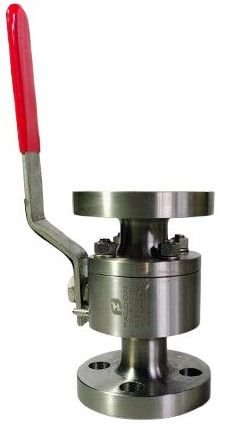
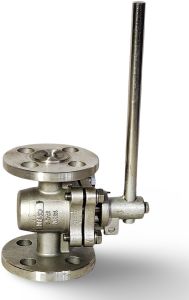
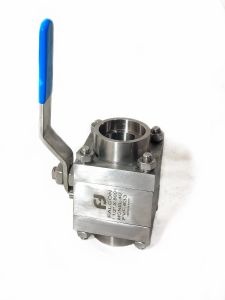
Falcon UNS N08825 (Alloy 825) forged ball valves represent the pinnacle of high-pressure, quarter-turn isolation technology. Designed specifically for severe service where standard stainless steel or duplex alloys fail, these valves combine the rapid operation of a ball valve with the extreme chemical resistance of a nickel-iron-chromium-molybdenum-copper alloy.
Falcon Forged Alloy 825 Ball Valves Specialized Design Features
-
Precision Forged Body: Manufactured to ASTM B564, our forged bodies provide a high-strength, non-porous structure that is significantly more reliable than cast valves in high-pressure gas applications.
-
Quarter-Turn Efficiency: Designed for fast, 90-degree actuation with low torque requirements, even at maximum differential pressure.
-
Floating & Trunnion Designs: Available in Floating Ball (for standard high-pressure service) and Trunnion Mounted (for larger sizes or extremely high pressures) to ensure seat integrity.
-
Blow-out Proof Stem: Engineered for maximum safety, the stem is designed to remain secure within the valve body even under extreme pressure surges.
-
Fire-Safe Design: Standard construction includes secondary metal-to-metal seating to maintain seal integrity in the event of a fire.
Precision Manufacturing
-
Mirror-Finished Ball: Each Alloy 825 ball is diamond-lapped to a mirror finish. This reduces friction, extends the life of the seats, and ensures a bubble-tight seal.
-
Titanium Stabilization: Our manufacturing process preserves the titanium-stabilized matrix of Alloy 825, preventing intergranular corrosion after machining or welding.
-
Seat Material Versatility: While the body is forged Alloy 825, we offer specialized seat inserts (PTFE, RPTFE, Devlon, or PEEK) to match the specific temperature and chemical needs of your process.
Testing to Top Industry Standards
Every Falcon ball valve is subjected to a rigorous "Zero-Leakage" testing regime before dispatch:
-
API 598 Pressure Testing: Includes high-pressure hydrostatic shell and seat tests, and low-pressure air seat tests.
-
API 607 Fire Testing: Certified designs that ensure performance during and after high-temperature exposure.
-
Fugitive Emission Testing (ISO 15848-1): Verifies that the stem seal prevents hazardous gas leakage into the atmosphere.
-
PMI Verification: 100% Positive Material Identification of all pressure-retaining components to confirm the Alloy 825 chemical signature.
Technical Specifications
| Feature | Detail |
| Material | Forged Nickel-Iron-Chromium Alloy (ASTM B564 UNS N08825) |
| Pressure Ratings | Class 150lb up to 2500lb |
| Sizes |
1/2" to 12" (Forged Range) |
| Compliance | API 6D, ASME B16.34, NACE MR0175/ISO 15156 |
| End Connections | Threaded (NPT), Socket Weld (SW), Flanged (RF/RTJ) |
Primary Industry Use
-
Offshore Oil & Gas: High-pressure chemical injection and manifold isolation.
-
Petrochemical Plants: Managing highly corrosive acids and volatile organic compounds.
-
Water Treatment: Handling concentrated chlorine and brine solutions in desalination.
Falcon Alloy 825: Chemical Compatibility Guide
The unique chemistry of Alloy 825 (Ni-Fe-Cr-Mo-Cu) allows it to bridge the gap between standard stainless steels and expensive high-nickel alloys. Below is a breakdown of how Falcon valves perform against the most aggressive industrial chemicals.
1. Performance in Acidic Media
-
Sulfuric Acid (H2SO4): Exceptional resistance to all concentrations up to 80% at boiling temperatures. The addition of Copper in the Falcon alloy matrix specifically enhances resistance to this "reducing" acid.
-
Phosphoric Acid (H3PO4): Outperforms 316L and Duplex in fertilizer production lines, resisting pitting even in the presence of fluoride impurities.
-
Nitric Acid (HNO3): The high Chromium content ensures the valve remains passivated (protected) in oxidizing environments.
-
Hydrochloric Acid (HCl): Resistant to dilute concentrations at moderate temperatures.
Looking for "Forged ASTM B564 UNS N08825 Inconel Ball Valves" ?
PIECE
Explore More Products
Our Blogs